

Think before Deciding
Behind every coaching decision today lies a hidden cognitive battle. Modern hockey — and its invasion‑sport cousins in football, rugby sevens, and lacrosse — now demands that coaches act as integrators of biology, tactics, psychology, social dynamics, and long‑term development. Athlete data has exploded. Support teams have multiplied. Athletes bring more psychological and social complexity. And everyone expects evidence‑based decisions. The environment has evolved faster than the brain. As Lyle (2002) notes, coaching is now a “complex decision‑making environment,” and cognitive load theory (Sweller, 1988) explains why even elite coaches feel stretched thin. To make sense of this complexity, we begin with the five decision streams that shape modern coaching and the neuroscience behind them.

PUT BIAS aside
Selection in sport is supposed to be evidence‑based. But too often, it’s shaped by memory, comfort, and confirmation bias. Coaches don’t just pick players — they pick narratives. And when these are anchored in familiarity rather than performance, selection becomes a reflection of the coach, not the athlete. Here we try to unpack some basic psychology behind favouritism, and offers tools to make selection fairer, sharper, and more defensible.
START it UP - CNS
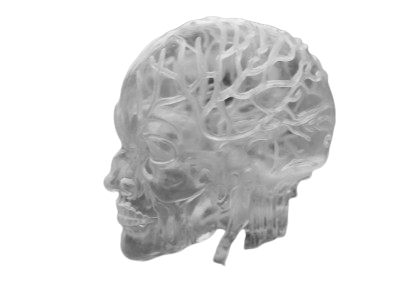
Hockey is lumped with other “field invasion sports,” as if it shares the exact same neural demands as football or rugby. It doesn’t. It’s a sport where a hard projectile can travel faster than most athletes can process, manipulated via a one‑metre lever in a compressed space with 360° threats. That combination makes hockey one of the most Central Nervous System (CNS) ‑ hostile sports currently played. It is simply not football, and constantly copying and pasting sports science memes across to hockey is a seriously flawed practice.
Football clubs like Arsenal now use CNS‑priming warm‑ups that blend low‑load explosive work, scanning, and partner‑coordination drills to “switch on” the system without fatigue. That’s a great baseline. But for hockey, it’s not enough. This article builds the case—neuroscientifically and practically in detail—for full‑range CNS activation in hockey as an integral part of training and pre-match priming of integrated body systems.